How to pin the right way: where, how and what goes wrong
Where the needle goes changes how fast a peptide reaches your blood, whether it soaks in at all, and what happens when something goes wrong. This guide goes through it step by step, from the fat under your skin to the muscle, with the study behind every point.

In short
- Most peptides go under the skin (sub-Q). Fat soaks a shot up slowly, a muscle faster, a vein all at once
- The belly absorbs faster than the thigh or arm, and training the leg you just pinned speeds up a thigh shot
- Pinning the same spot every day can grow a hard lump that absorbs less. Move every shot at least a finger's width away
- In the rat studies behind BPC-157, a shot in the belly healed injuries far away. No human study has compared spots
- Hitting a vein matters most with insulin, oxytocin and oil-based shots. The Z-track stops muscle shots leaking back out
Fat, muscle or vein: why the spot changes everything
There are three places a shot can end up, and each one gets the dose into your blood at a different speed.
- Under the skin (sub-Q). The fat under your skin has fewer blood vessels than muscle, so a shot there soaks in slowly, over hours. That's where most peptides go, Ozempic included.
- Into a muscle (IM). Muscle has a much richer blood supply, so a shot there is picked up faster.
- Into a vein (IV). No soaking in at all. The whole dose is in your blood at once. Hospitals do this on purpose with some drugs, but for a shot meant for the fat or the muscle, landing in a vein is the one place you don't want to be.
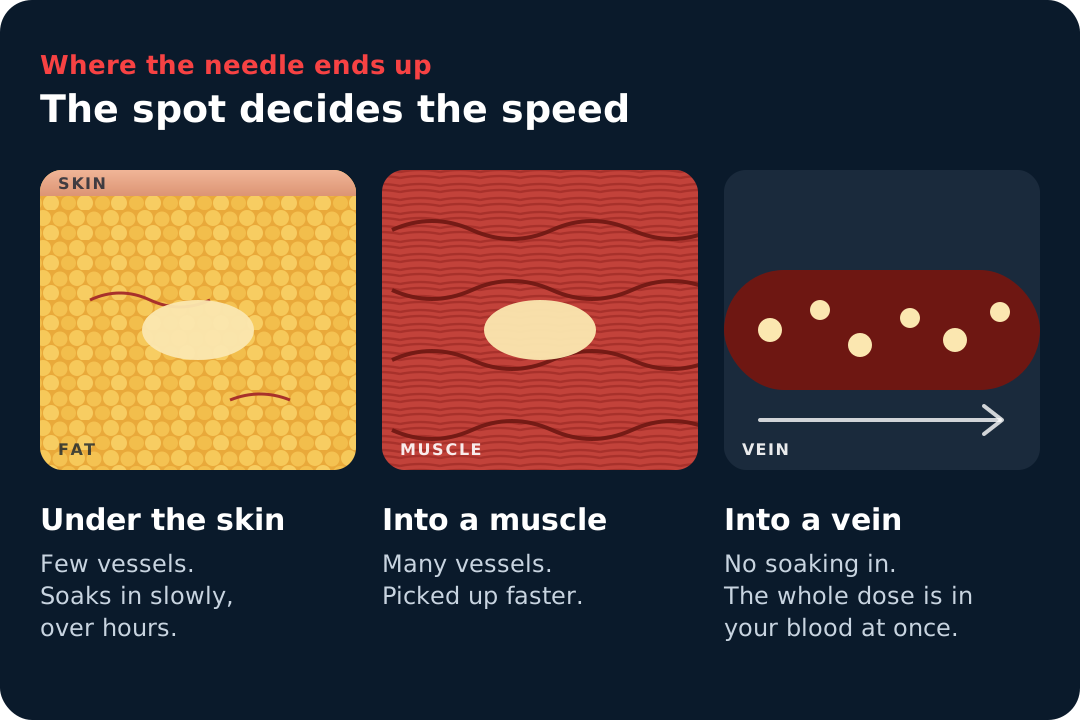
Everything below follows from this. The spot decides the speed, and the speed decides what can go wrong.
Belly, thigh or arm: does it matter?
For a shot under the skin, the usual spots are the belly, the front of the thighs and the back of the upper arms. The Ozempic label lists exactly these three. They are not the same, though.
No study has compared injection spots for BPC-157 or any other gym peptide. The best data comes from insulin, which is also a peptide and has been tested at every spot.
In one study, 12 healthy people got the exact same insulin shot three times: once in the belly, once in the arm and once in the thigh. From the belly it reached the blood fastest and peaked highest. From the arm and the thigh it came in slower and lower, and lasted longer. The gap was biggest with regular insulin. With the faster insulin lispro, the total effect ended up nearly the same at all three spots, only the timing differed.
The reason is blood flow. The fat on your belly has more blood running through it than the fat on your thighs, and a shot only starts working once the blood picks it up and carries it away.
Leg day changes the picture. A working muscle pulls a lot more blood through the whole leg. In a 1978 study, people with type 1 diabetes injected insulin into the thigh and then exercised their legs: in the first 10 minutes, the insulin left the leg 135% faster than at rest. When they injected into the arm or the belly instead, the drop in blood sugar during exercise was 57% smaller (arm) and 89% smaller (belly). A later study did not see the same speed-up, so take it as "it can", not "it always does".
In practice: the belly is the most predictable spot. If you use the thigh, the timing of your training can change how fast the shot hits.
Move the spot every time
Every shot is a tiny injury. Hit the same spot again and again, and the fat there can swell up and harden into a rubbery lump. Doctors call it lipohypertrophy. With insulin, two things seem to cause it together: the repeated needle trauma, and insulin's own effect on fat cells, which it tells to grow.
It is common. One team examined 430 people who inject insulin every day, and a diabetes nurse felt every injection spot by hand. 64% had these lumps. Among the people who rotated their spots correctly, only 5% did, and 98% of the people with lumps either didn't rotate or did it wrong.
Why a lump matters. German researchers gave 13 people with type 1 diabetes the same insulin shot twice, once into a lump and once into normal fat. From the lump, about a fifth less insulin reached the blood, and how much got in varied far more from shot to shot.
The risk comes when you switch. If you have been pinning into a lump and move to fresh skin, the full dose suddenly gets in. With insulin, that can crash blood sugar. The Humalog label says it directly: "a sudden change in the injection site (to an unaffected area) has been reported to result in hypoglycemia". The UK medicines regulator gives the same warning for lumpy injection areas. Even the Ozempic label tells you to "use a different injection site each week when injecting in the same body region".
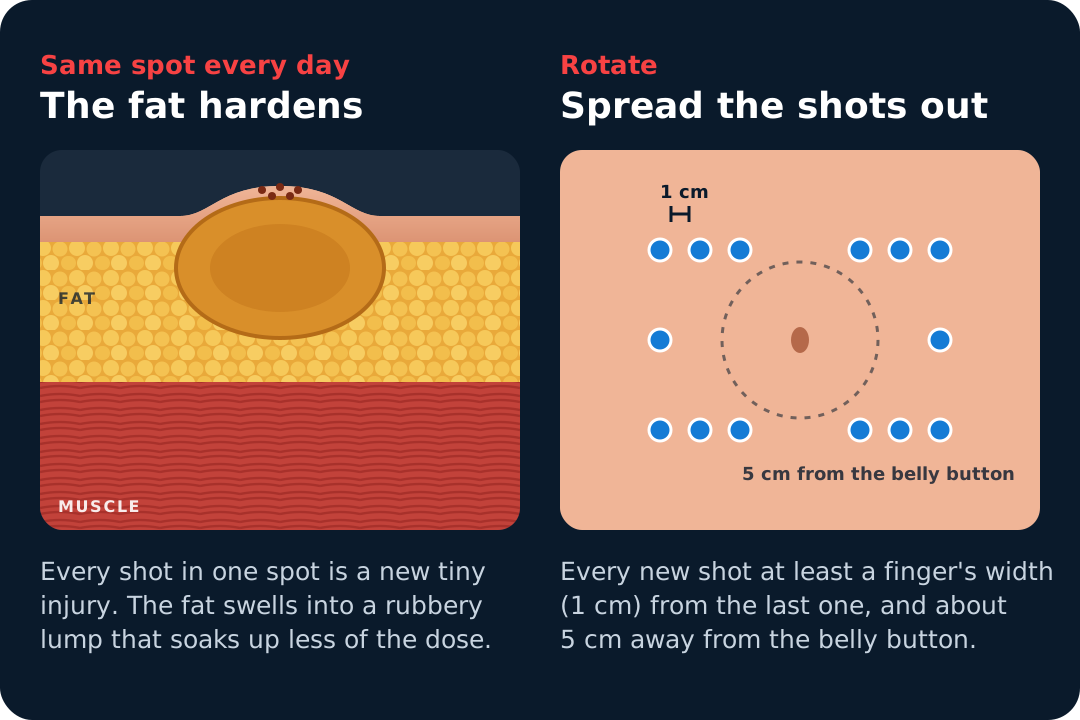
How to rotate:
- Use the belly, the front of the thighs or the back of the upper arms.
- On the belly, stay about 5 cm (two inches) away from the belly button.
- Put every new shot at least 1 cm, about a finger's width, away from the last one.
- Feel your spots now and then. A spot that feels thicker or rubbery than the skin around it: leave it alone until it is normal again.
Should you pin into the injury?
Online, the standard advice for healing peptides like BPC-157 is to pin as close to the injury as you can. The studies everyone quotes did something else.
The Achilles study. Researchers in Zagreb cut the Achilles tendon of rats and left a gap. Every day they injected BPC-157 into the belly cavity, far from the leg, while other rats got salt water. The BPC-157 rats healed better: stronger tendon, smaller gap, better walking.
The knee ligament study. The same lab cut a ligament inside the knee of rats and gave BPC-157 three ways: a shot into the belly cavity, a cream right on the injury, or mixed into the drinking water. All three healed better than no BPC-157. The paper does not rank one route above the others.
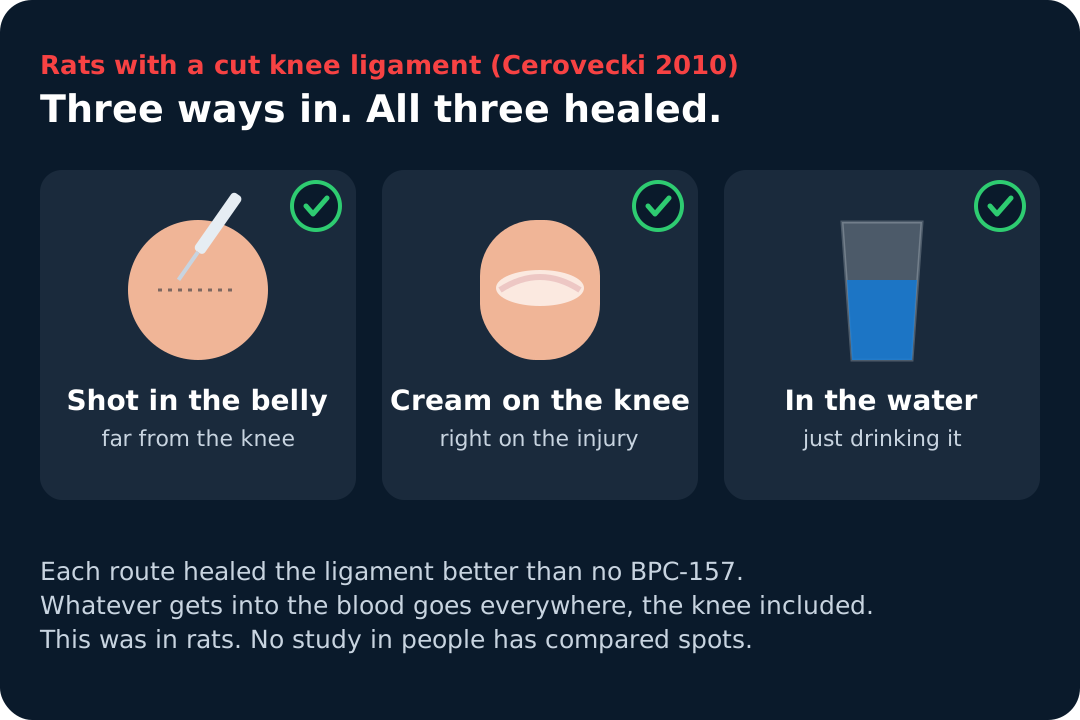
So how does a shot in the belly reach a tendon in the leg? Whatever you put under your skin or into a muscle ends up in your blood, and your blood goes everywhere. In rats and dogs, BPC-157 is picked up into the blood after an injection and cleared within hours.
What about people? The one human study that injected BPC-157 put it straight into painful knees. 11 of the 12 people who got only BPC-157 said their pain got clearly better. But there was no comparison group, nobody got the same shot in the belly, and people rated their own pain months later. It cannot tell you whether the spot mattered. A 2025 review of BPC-157 in sports medicine found 36 studies, 35 of them in animals or the lab and 1 in people.
The honest version: in rats, the spot did not matter for healing. In people, nobody has tested it. Some shots really are meant to go into the injury, cortisone into an arthritic knee is a standard treatment because it works right there. BPC-157 is not one of those in any study we know of, so there is no evidence that pinning into a sore shoulder beats a normal shot under the skin of your belly.
What if you hit a vein?
In the fat
Fewer vessels doesn't mean none. Tiny blood vessels run all through the fat under your skin, which is why you sometimes see a drop of blood when the needle comes out, or a small bruise the next day. The big veins, the ones a nurse takes blood from, run mostly through the arms. With a short insulin needle in the belly, landing in a real vein is unlikely.
In a muscle
Muscle is packed with blood vessels, so the chance of hitting one is higher. The classic technique for a muscle shot is to pull the plunger back a little before injecting: if blood comes into the syringe, you are in a vessel, so you pull out and pick a new spot. The CDC says it is "not necessary" for vaccines, but the label of Aveed, an oil-based testosterone shot, still tells the nurse to "pull back on the plunger and aspirate for several seconds to ensure that no blood appears". Nursing texts disagree on everything in between. One still teaches it for muscle shots, another says to follow local policy. It does happen: in a survey of 164 nurses, 40% had pulled back blood at least once.
What happens then depends on what you inject
- BPC-157. In a small pilot, 2 adults got BPC-157 dripped into a vein on purpose, 10 mg and then 20 mg, and had no side effects or changes in their blood markers over 3 days of follow-up. Both had been given IV BPC-157 before. Two people is very little, but it is the only data there is.
- Insulin. Also a peptide. Under the skin it works over hours. Straight into a vein it acts much faster, and it is cleared fast too: the label gives a half-life of about 20 minutes to 1 hour, depending on the dose. Blood sugar can fall quickly, which is why the label allows insulin into a vein "ONLY under medical supervision with close monitoring of blood glucose and potassium levels".
- Oxytocin. It can be given as a muscle shot, but a quick dose into a vein can drop blood pressure and make the heart race, so its label says it must "never" be given as a quick shot into a vein.
- Anything in oil. Testosterone shots are dissolved in oil. If oil gets into a vein, tiny drops can travel to the lungs. It's called pulmonary oil microembolism (POME). The label of Aveed, a long-acting testosterone shot, carries a boxed warning for it: an urge to cough, shortness of breath, a tight throat, chest pain, dizziness or fainting, during or right after the shot.
Why a muscle shot leaks
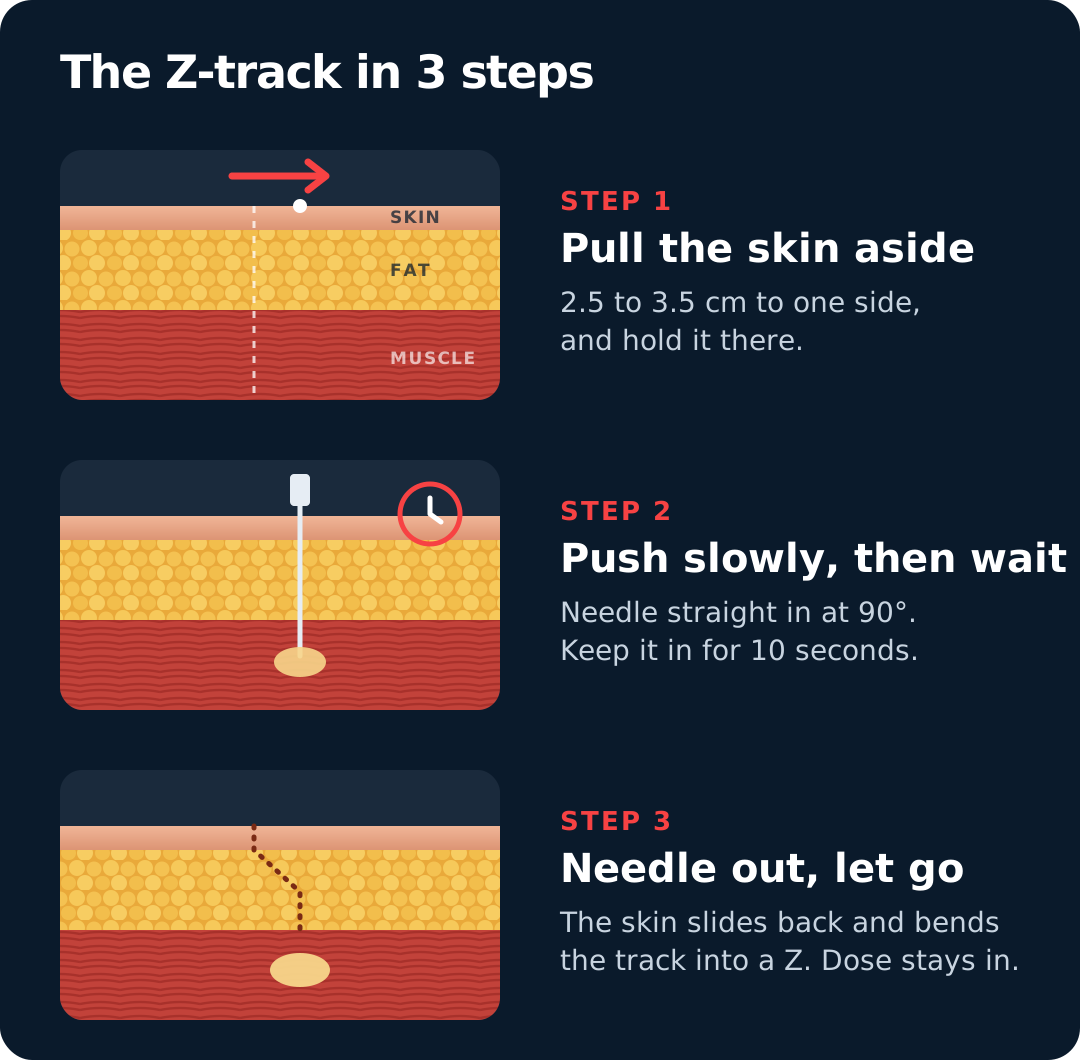
A needle going straight down leaves a straight tunnel through skin, fat and muscle. When it comes out, that tunnel is a short road back to the surface. Nursing texts describe the Z-track as the way to stop the medication being "tracked through the subcutaneous tissue" and to seal it in the muscle.
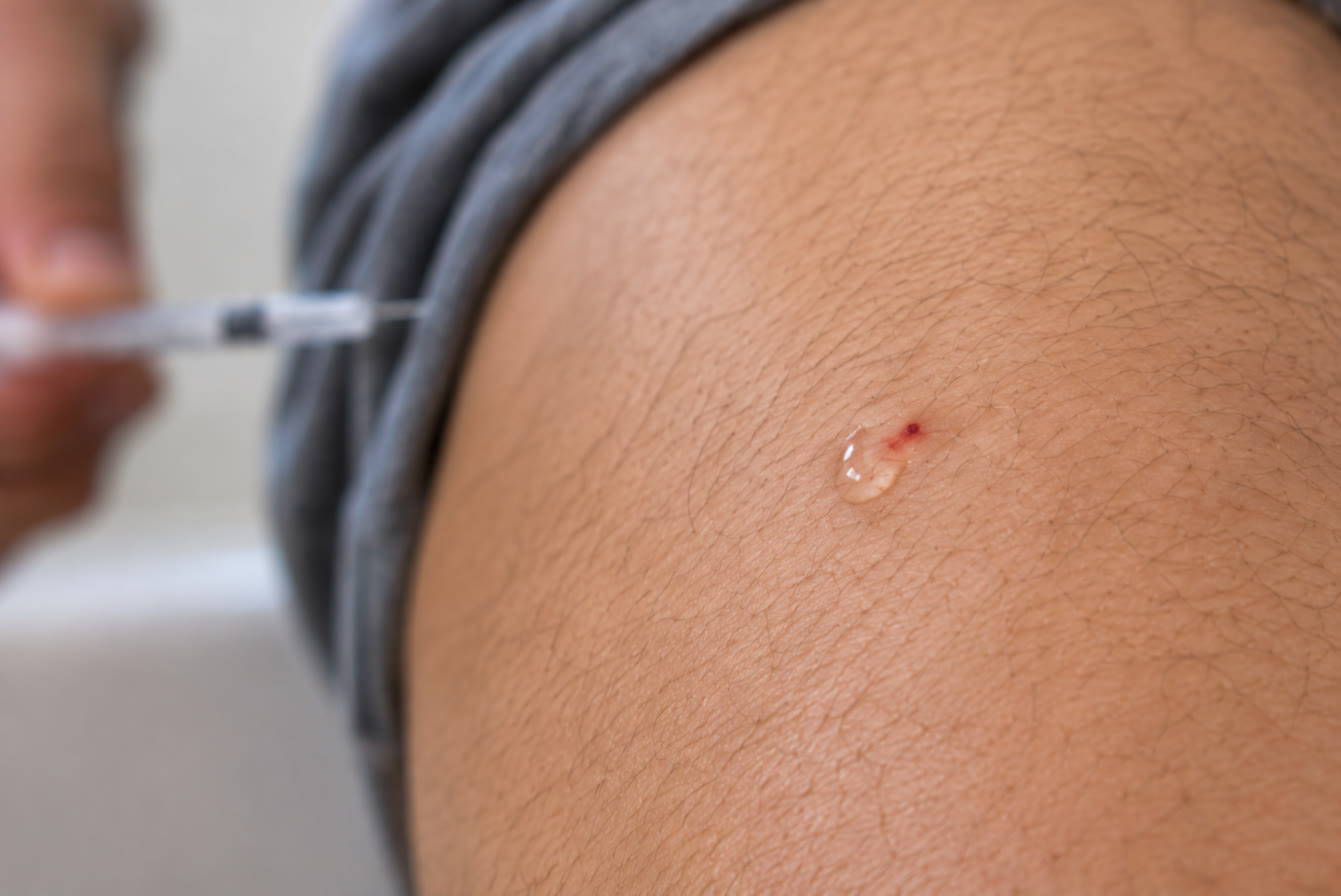
It is not a rare problem. In a survey of 303 nurses, cited in a 2023 trial registration, 73% said they see the product leak after injections. Leakage and bleeding onto the skin, pain, irritation and skin lesions are listed among the problems at the injection site.
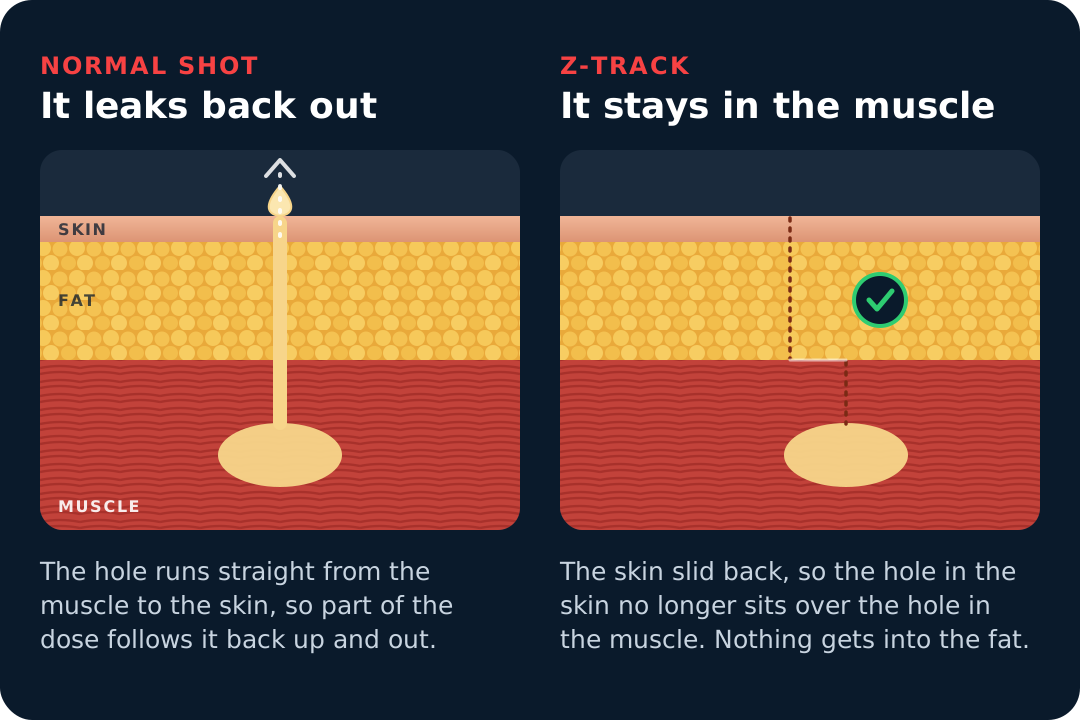
The trick is that the layers slide. If you shift the skin and fat sideways before the needle goes in, then let go after it comes out, the layers slide back and the hole in the skin no longer sits above the hole in the muscle. The textbook calls it "a zigzag path that seals the needle track".
The Z-track in 3 steps
1. Pull the skin aside
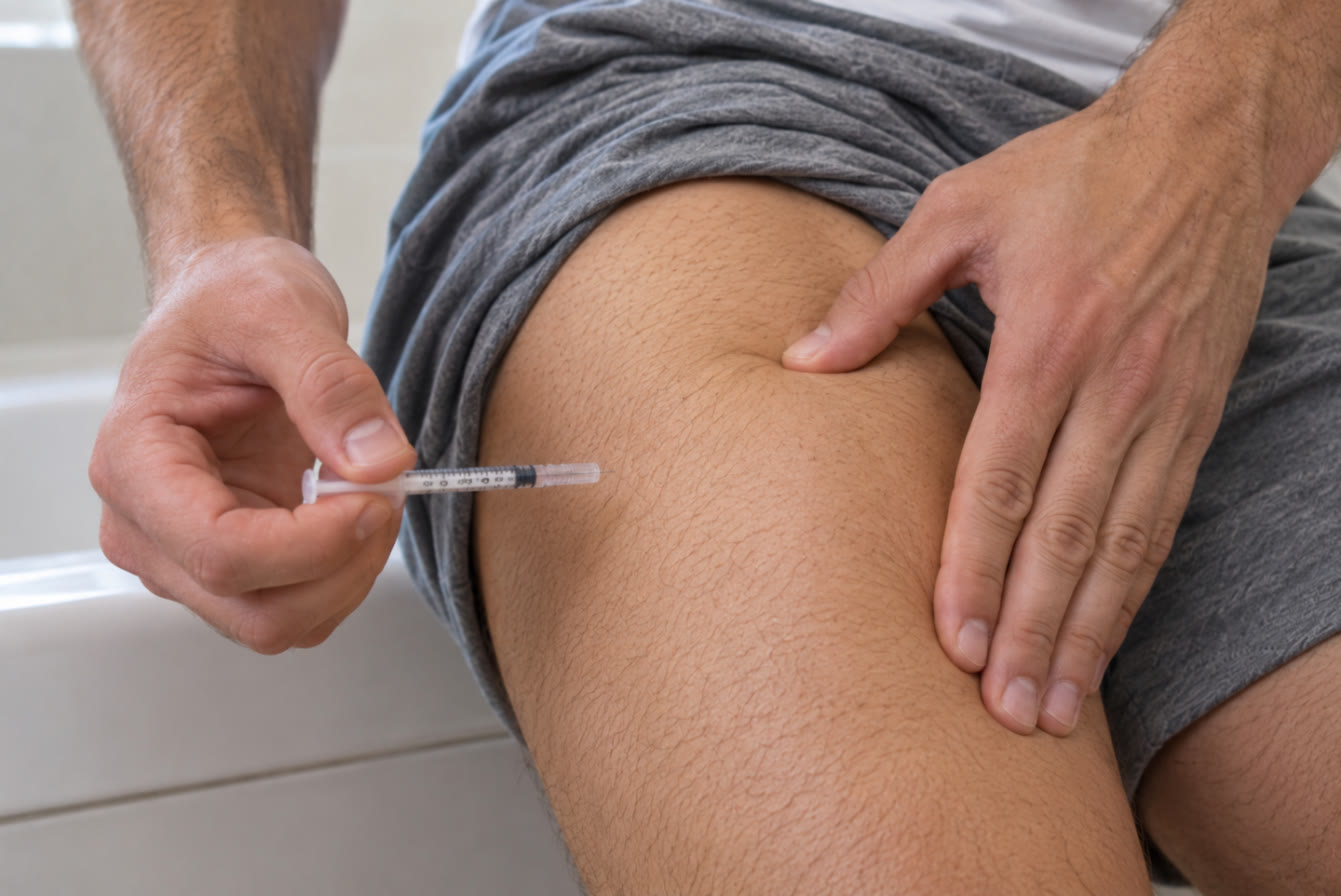
With your free hand, pull the skin and the fat under it about 2.5 to 3.5 cm (1 to 1.5 inches) to the side, and hold it there. Another nursing text says about 2 cm, down or to one side.
2. Push slowly, then wait
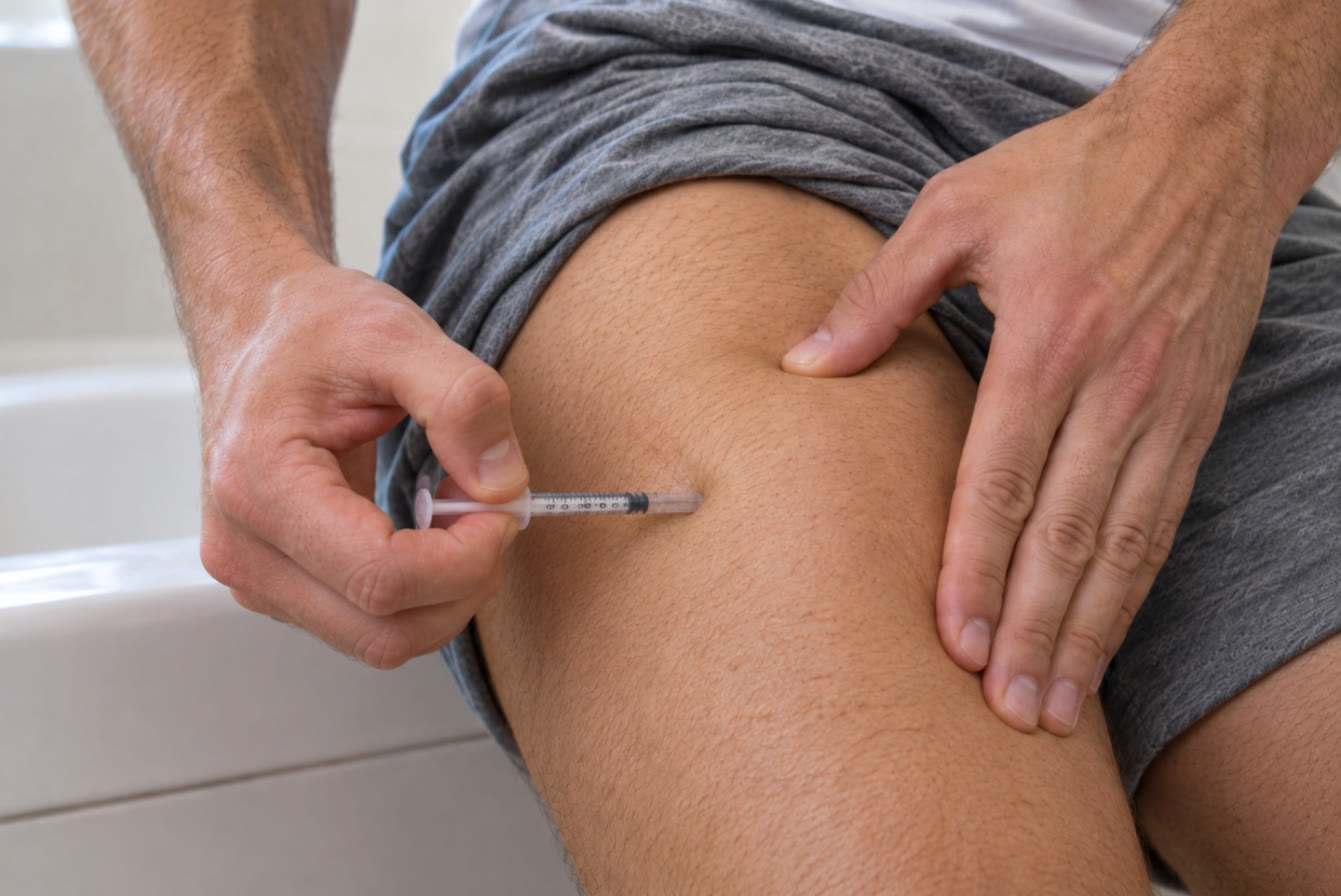
Keep holding the skin. Put the needle in quickly and straight, at 90 degrees, then push the plunger slowly, about 10 seconds for every 1 ml. When it's down, leave the needle where it is for 10 seconds and don't move the syringe. A quick needle and a slow plunger is also what a 2018 review describes: "Quick insertion of the needle will result in reduced pain".
3. Pull out, then let go
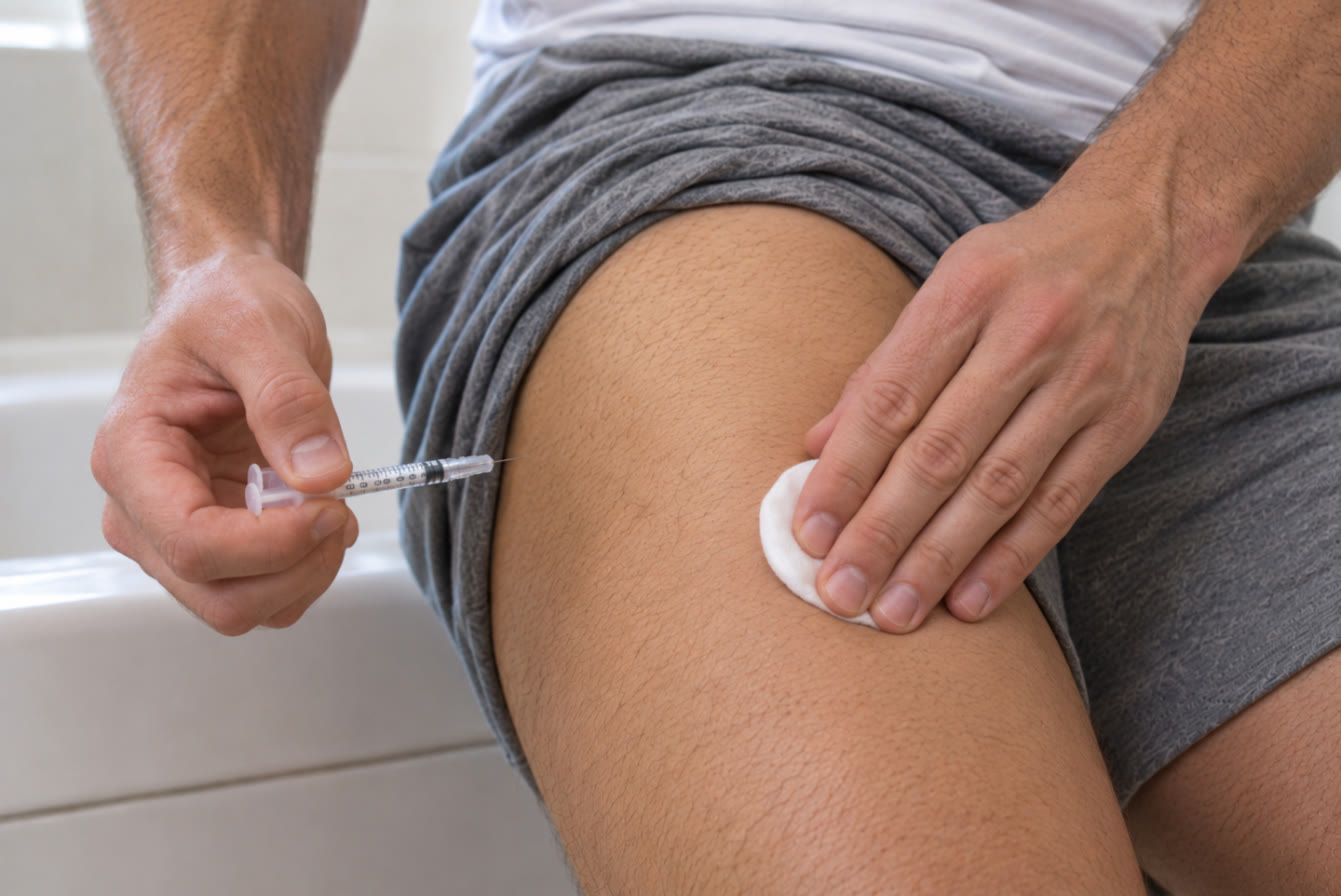
Take the needle out in one smooth move at the same angle it went in. Only then release the skin. Press lightly with gauze. The Z-track checklist says not to massage the site.
That's it. The whole difference from a normal shot is one hand holding the skin to the side until the needle is out.
Does the Z-track actually work?
For leakage, yes, in the one trial that measured it. In a randomized trial of 60 patients getting a 3 ml shot into the muscle, the leak spot on blotting paper measured 6.93 mm on average with the Z-track and 10.03 mm with the standard technique. That is roughly a third smaller.
For pain, the answer is less clear. In that same trial, pain scores were lower with the Z-track (28.3 vs 36.4 out of 100), but the difference was not significant. An older study of 50 people, each getting both techniques, found fewer skin lesions and less discomfort at some time points with the Z-track.
A 2021 review that pooled the injection pain studies found "insufficient evidence on the benefits of the Z track technique" for pain, from 2 studies. The authors also point out that the recommendation may come more from experience and descriptive studies than from big trials.
So the honest version: the Z-track is cheap, takes no extra time and has trial evidence for less leakage. Don't expect it to make the shot painless.
How common is it to know this? In the survey of 303 nurses, 89% were not familiar with the Z-track or the airlock technique.
Which muscle, how much, which needle
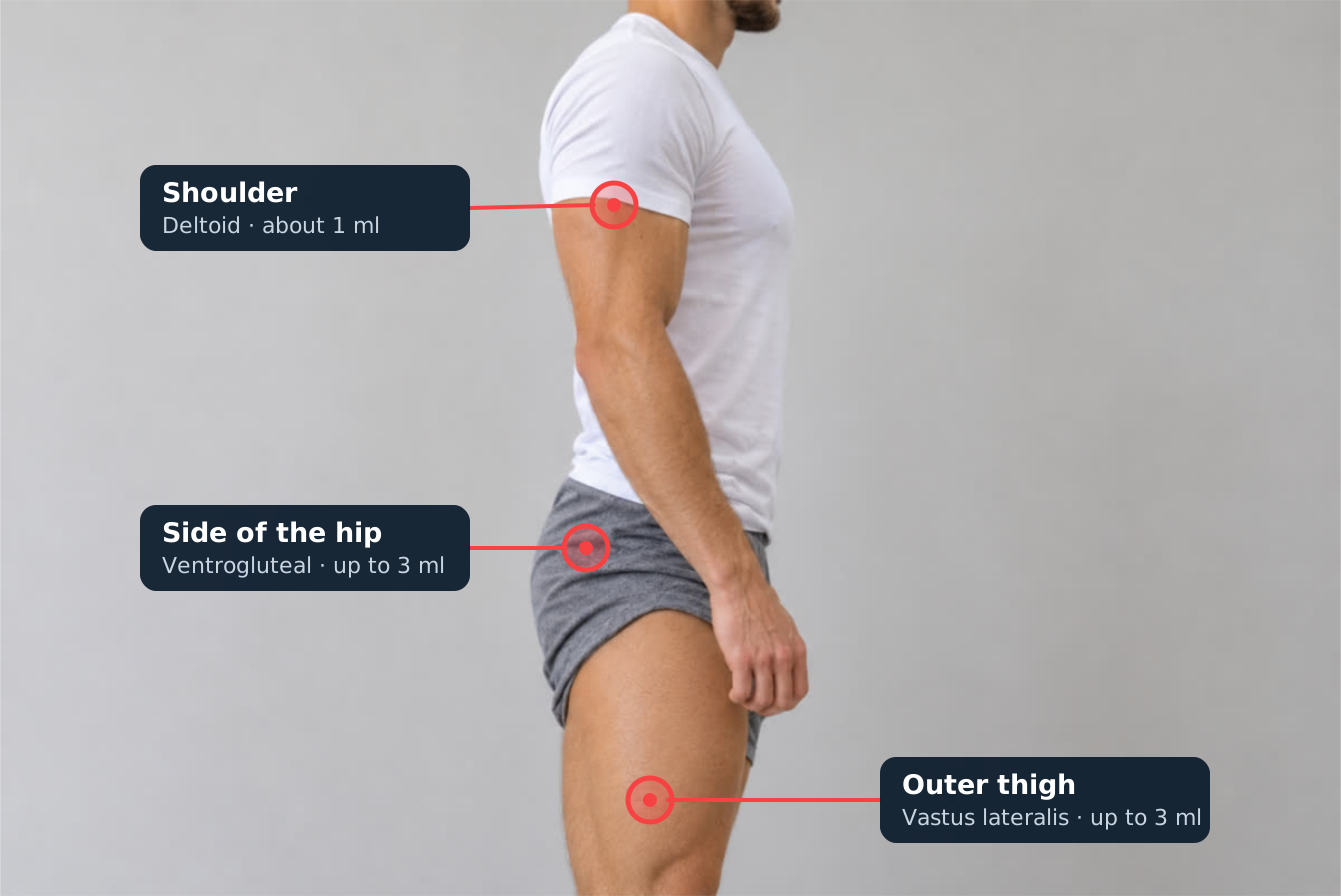
The nursing texts give these limits for one injection in an average adult:
| Muscle | Where | Max per shot | Needle length (adult) |
|---|---|---|---|
| Ventrogluteal (side of the hip) | Preferred and safest site | Up to 3 ml | 16 to 38 mm, by body size |
| Vastus lateralis (outer thigh) | Middle third of the outer thigh | Up to 3 ml | 25 to 38 mm |
| Deltoid (shoulder) | Easy to reach, small muscle | About 1 ml, 2 ml at most | 16 to 38 mm, by body weight |
Sources for the table: ventrogluteal as the preferred site, the deltoid "2 mL or less" and the outer thigh location; the 3 ml limits, the deltoid "generally 1 ml" and the needle lengths; deltoid needle length by weight.
Two more points from the same texts:
- Skip the classic upper outer butt cheek (dorsogluteal). Both texts advise against it because the sciatic nerve runs close by. A 2023 meta-analysis of 17 studies found less pain with the side of the hip than with the dorsogluteal site.
- Thin and older people may only tolerate up to 2 ml in one shot. Rotate the sites.
Mistakes that make it leak or hurt
- Pushing too fast. The textbook pace is 10 seconds per ml.
- Letting go of the skin too early. Release only after the needle is out, or the track lines back up.
- Pulling out straight away. Wait the 10 seconds.
- Moving the syringe while it's in. Movement of the needle once it's in "can cause additional discomfort".
- A needle too short for your body. Then the shot may never reach the muscle. Studies put the share of intended muscle shots that actually land in muscle at 32 to 52%, with women, higher body fat and the injection site as risk factors.
- The wrong angle. Shots into the muscle go in at 90 degrees. A 60 degree angle can end up under the skin instead, especially with more body fat.
- Too much in one spot. Keep to the limits in the table above.
How a sub-Q shot is done
Most peptides people use go under the skin with a short insulin needle, not into the muscle. The Z-track is written as a technique for shots into the muscle: its whole job is to keep the dose in the muscle and out of the fat above it.
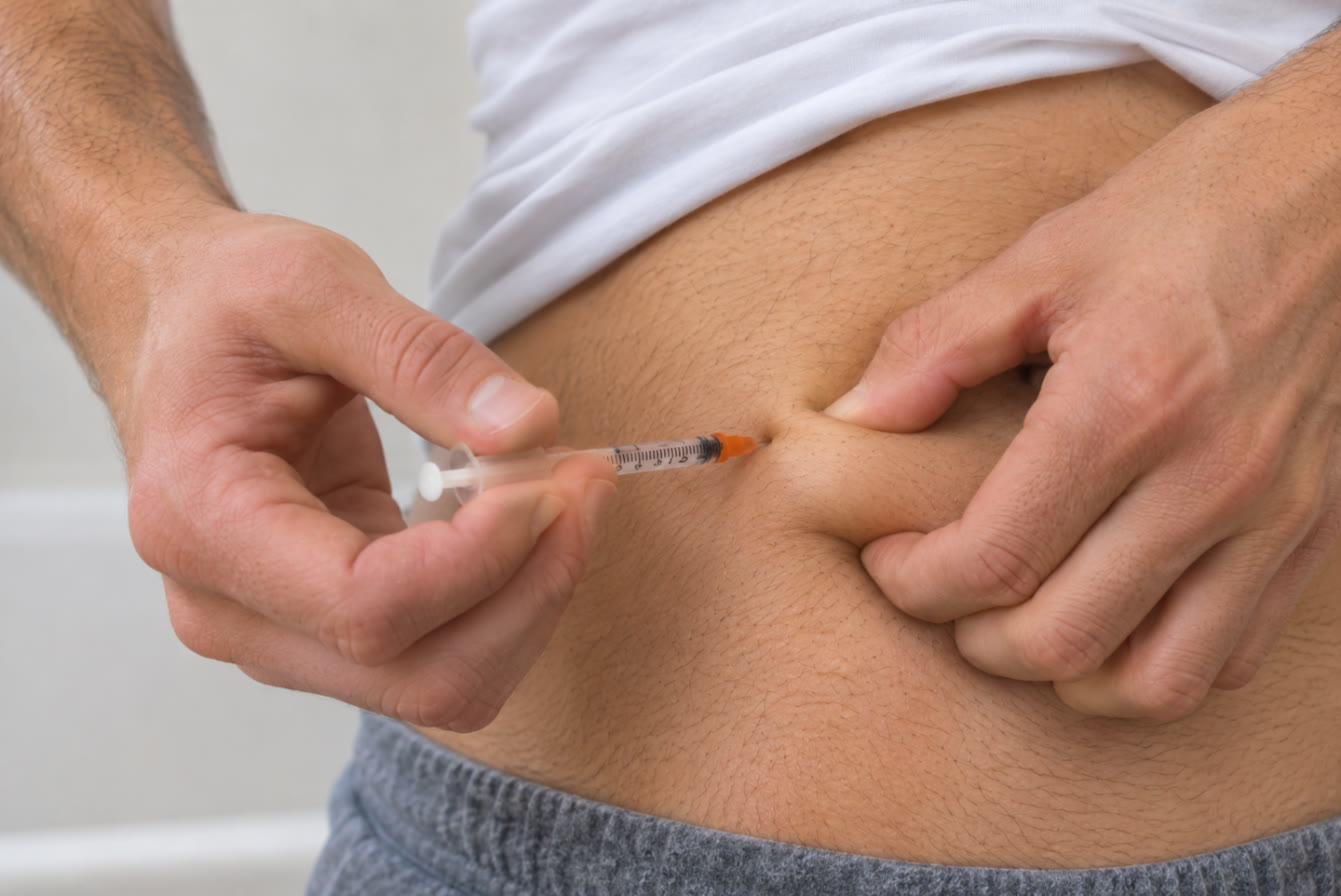
The textbook's sub-Q steps: a 25 to 30 gauge needle of 3/8 to 5/8 inch, at 45 to 90 degrees, usually no more than 1 ml, 10 seconds per ml, and no massage afterwards. Then move the spot next time, as above. We found no source that says Z-track must never be used for sub-Q. Our reading is simply that it was not designed for it.
The airlock technique
You may also hear about the airlock: a small amount of air drawn into the syringe after the liquid and injected behind it. The evidence is thin and mixed. One unblinded trial in 90 women found less pain with the airlock than with the Z-track, another study found no difference between the two. A larger trial of both techniques is registered but has no published results yet.
I don't gatekeep.
Tell me what you're after and where you live. I'll email you my source.
Sources 36 studies and labels
- Perry, LaPlante, Ostendorf and Potter, Clinical Nursing Skills and Techniques, 11th ed. (2025), IM injection tip sheet, SUNY Upstate College of Nursing. upstate.edu
- Clinical Procedures for Safer Patient Care, BCcampus open textbook (2015), intramuscular injections and Z-track checklist. opentextbc.ca
- Clinical Procedures for Safer Patient Care, BCcampus open textbook (2015), subcutaneous injections. opentextbc.ca
- Ozempic (semaglutide) US label. DailyMed
- ter Braak et al. (1996). Injection site effects on insulin lispro and regular insulin. Diabetes Care. PubMed 8941480
- Vora et al. (1992). Insulin absorption, subcutaneous blood flow and anthropometry. Diabetes Care. PubMed 1334825
- Koivisto and Felig (1978). Effects of leg exercise on insulin absorption. New England Journal of Medicine. PubMed 619237
- Kemmer et al. (1979). Exercise and insulin absorption. Diabetes. PubMed 510811
- Gentile et al. (2018). Insulin-related lipohypertrophy: lipogenic action or tissue trauma? Frontiers in Endocrinology. full text
- Blanco et al. (2013). Prevalence and risk factors of lipohypertrophy in insulin-injecting patients. Diabetes & Metabolism. PubMed 23886784
- Famulla et al. (2016). Insulin injection into lipohypertrophic tissue: blunted and more variable absorption. Diabetes Care. PubMed 27411698
- MHRA Drug Safety Update (2020). Insulins: risk of cutaneous amyloidosis at the injection site. gov.uk
- Humalog (insulin lispro) US label. DailyMed
- Gradel et al. (2018). Factors affecting the absorption of subcutaneously administered insulin. Journal of Diabetes Research. full text
- MedlinePlus (NIH), How to give an insulin injection. medlineplus.gov
- Staresinic et al. (2003). Gastric pentadecapeptide BPC 157 and Achilles tendon healing in rats. Journal of Orthopaedic Research. PubMed 14554208
- Cerovecki et al. (2010). BPC 157 and medial collateral ligament healing in rats, three routes. Journal of Orthopaedic Research. PubMed 20225319
- He et al. (2022). Pharmacokinetics of BPC 157 in rats and dogs. Frontiers in Pharmacology. full text
- Lee and Padgett (2021). Intra-articular BPC 157 for knee pain. Alternative Therapies in Health and Medicine. PubMed 34324435
- Vasireddi et al. (2025). BPC-157 in sports medicine, systematic review. HSS Journal. full text
- Kolasinski et al. (2020). 2019 ACR/Arthritis Foundation guideline for osteoarthritis of the hand, hip and knee. PubMed 31908149
- CDC, General best practice guidelines for immunization: vaccine administration. cdc.gov
- Thomas et al. (2016). Nurses' aspiration practice for intramuscular injections. Clinical Nursing Research. PubMed 25784149
- Lee and Burgess (2025). Intravenous BPC 157 safety pilot in 2 adults. Alternative Therapies in Health and Medicine. PubMed 40131143
- Humulin R (regular insulin) US label. DailyMed
- Oxytocin 10 IU/ml, summary of product characteristics. emc
- Aveed (testosterone undecanoate) US label, boxed warning on POME. DailyMed
- Yilmaz et al. (2016). Z-track vs standard technique, leakage and pain, randomized trial. Clinical Nurse Specialist. PubMed 27753676
- Keen (1986). Z-track vs standard IM injection, discomfort and lesions. Nursing Research. PubMed 3636818
- Ayinde et al. (2021). Reducing intramuscular injection pain, systematic review and meta-analysis. PLoS One. PubMed 33939726, full text
- ClinicalTrials.gov NCT05995457 (2023). Z-track and airlock trial, with the 303 nurse survey. clinicaltrials.gov
- Najafidolatabad et al. (2010). Airlock vs Z-track, pain. Investigación y Educación en Enfermería. revistas.udea.edu.co
- Mac Gabhann (1998). Air bubble vs Z-track depot injections. Nursing Standard. PubMed 9732632
- Soliman et al. (2018). A narrative review of the success of intramuscular gluteal injections. PubMed 30546922, full text
- Roldán-Chicano et al. (2023). Dorsogluteal vs ventrogluteal injection, systematic review and meta-analysis. Nursing Open. PubMed 37452553
- Immunize.org, Ask the Experts: needle length by site and body weight. immunize.org